

Orbit Lock: Three Mistakes That Can End Your Run
You've just landed a great merge in Orbit Lock.
Your score jumps. The wheel keeps turning. Another orb is ready to launch.
And then, one bad shot can end your run.
Sometimes that's just how the game goes. But sometimes the mistake happened before you launched.
Orbit Lock rewards more than matching numbers. You also have to think about what your next move will leave behind.
Here are three habits worth developing if you want your runs to last longer.
Mistake 1: Launching before you've found the right match
The first rule sounds simple. Match numbers to merge them.
But Orbit Lock puts those numbers on a rotating wheel.
That means the right number might be visible without being in the right position for your shot.
It's tempting to launch as soon as something promising passes by, especially when the wheel is crowded.
But a mismatched collision can cost you protection or end your run.
Don't confuse seeing a match with having a safe shot.
Imagine your next orb is an 8.
There's a 16 passing through the launch area, and another 8 approaching.
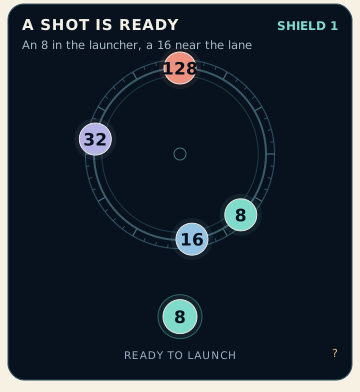
Which orb should you wait for?
The 16 might be tempting because it's a bigger number. But firing an 8 into a 16 isn't the match you're looking for.
The approaching 8 is what matters.
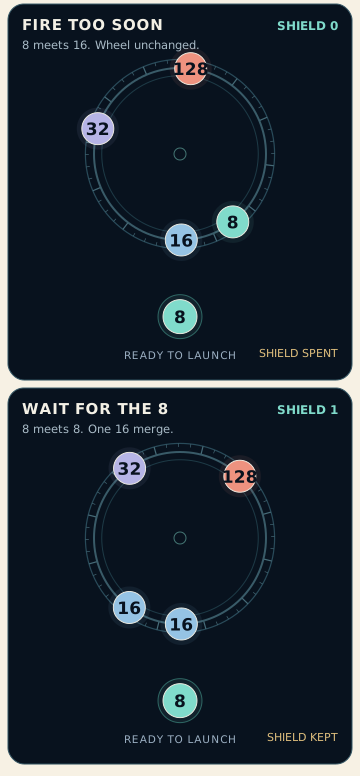
Before launching, take a moment to identify the number you're carrying and the number you're actually trying to hit.
And when a reversal warning appears, pay attention. The direction you're expecting may be about to change.
Mistake 2: Thinking only about the merge you're making
Suppose you launch an 8 into another 8.
They combine into 16.
Great. You made a successful merge.
But what if another 16 is already positioned where the new one can connect with it?
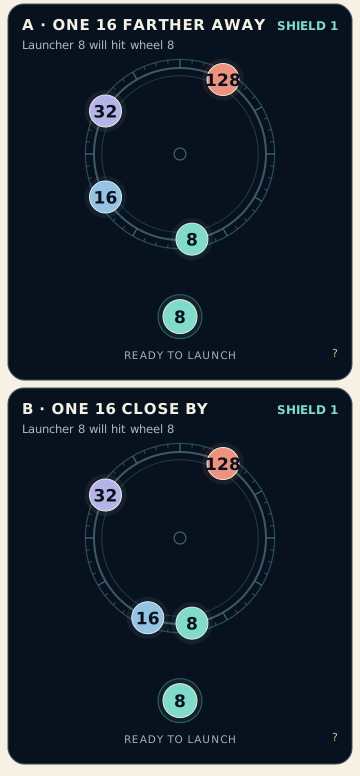
Which setup starts a chain?
Now that first merge might help create a 32.
That's the idea behind a chain reaction.
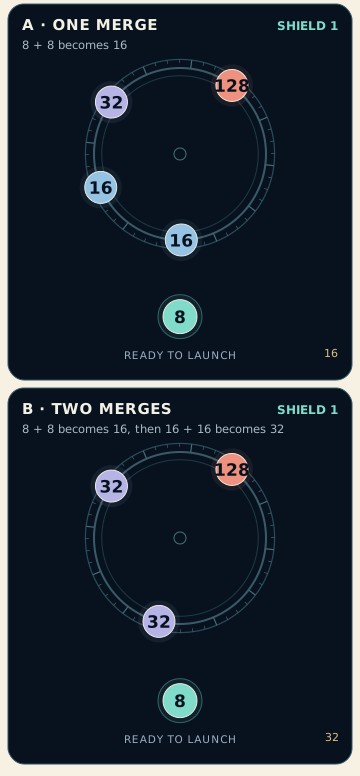
A successful shot can do more than increase one number. In the right arrangement, it can set off several merges.
So when you have more than one possible target, don't automatically choose the first matching orb.
Look at what's around it.
Which match leaves you with the better position afterward?
Sometimes a small merge that opens the way for another is more valuable than chasing the largest number currently on the wheel.
That doesn't mean every shot needs to create a chain.
It means the next opportunity is worth considering before you commit to the current one.
Mistake 3: Forgetting that the situation can change
Orbit Lock doesn't leave you with the same conditions forever.
The wheel can reverse direction. Orbit Shift changes the game's progression. And as the field gets crowded, finding a useful landing becomes harder.
The game also gives you tools to help manage difficult situations.
A Shield offers protection from a mistake. A Wildcard can turn a mismatched hit into an upgrade when an ordinary shot isn't ideal. Relocate can help reposition a stranded orb.
These are useful tools, but they aren't a substitute for planning.
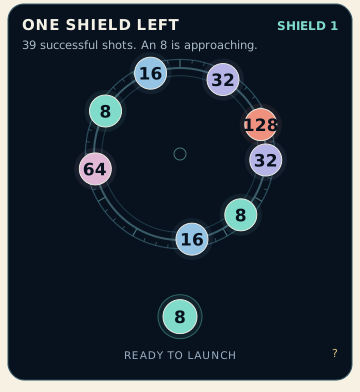
What happens if you spend the Shield?
In our crowded example, firing an 8 into the 16 spends the last Shield and leaves the same pieces attached. Waiting for the matching 8 keeps the Shield. That successful shot also triggers a reversal warning, so recheck the direction before aiming again.
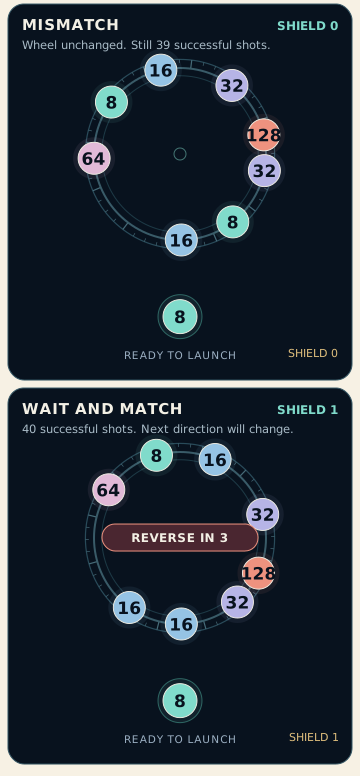
A Shield might save a run that would otherwise end. It doesn't necessarily leave you in a good position for the next shot.
And a Wildcard that gets you out of trouble now may be more valuable later when your options have narrowed even further.
The important habit is recognizing when you're using a tool to solve a problem and when you're simply postponing it.
Think one shot ahead
You don't need to plan an entire run before making your next move.
Just get into the habit of asking three questions:
Can I make a safe match?
Find the number you're carrying and watch for a reliable opportunity.
What will this merge leave behind?
Look for possible chains, open space, and future matching opportunities.
What's about to change?
Notice reversal warnings, progression changes, and whether you still have a way to recover from a difficult position.
These questions won't guarantee a perfect run.
But they can help you avoid mistakes that had nothing to do with luck.
Give it a try
The next time you play Orbit Lock, try slowing down your decisions, even when the wheel seems to be moving quickly.
You might discover that your best runs don't come from chasing the biggest merge every chance you get.
They come from making enough good decisions to reach those bigger numbers in the first place.
Play Orbit Lock on Uncle Logic and see how long you can keep your next run alive.